
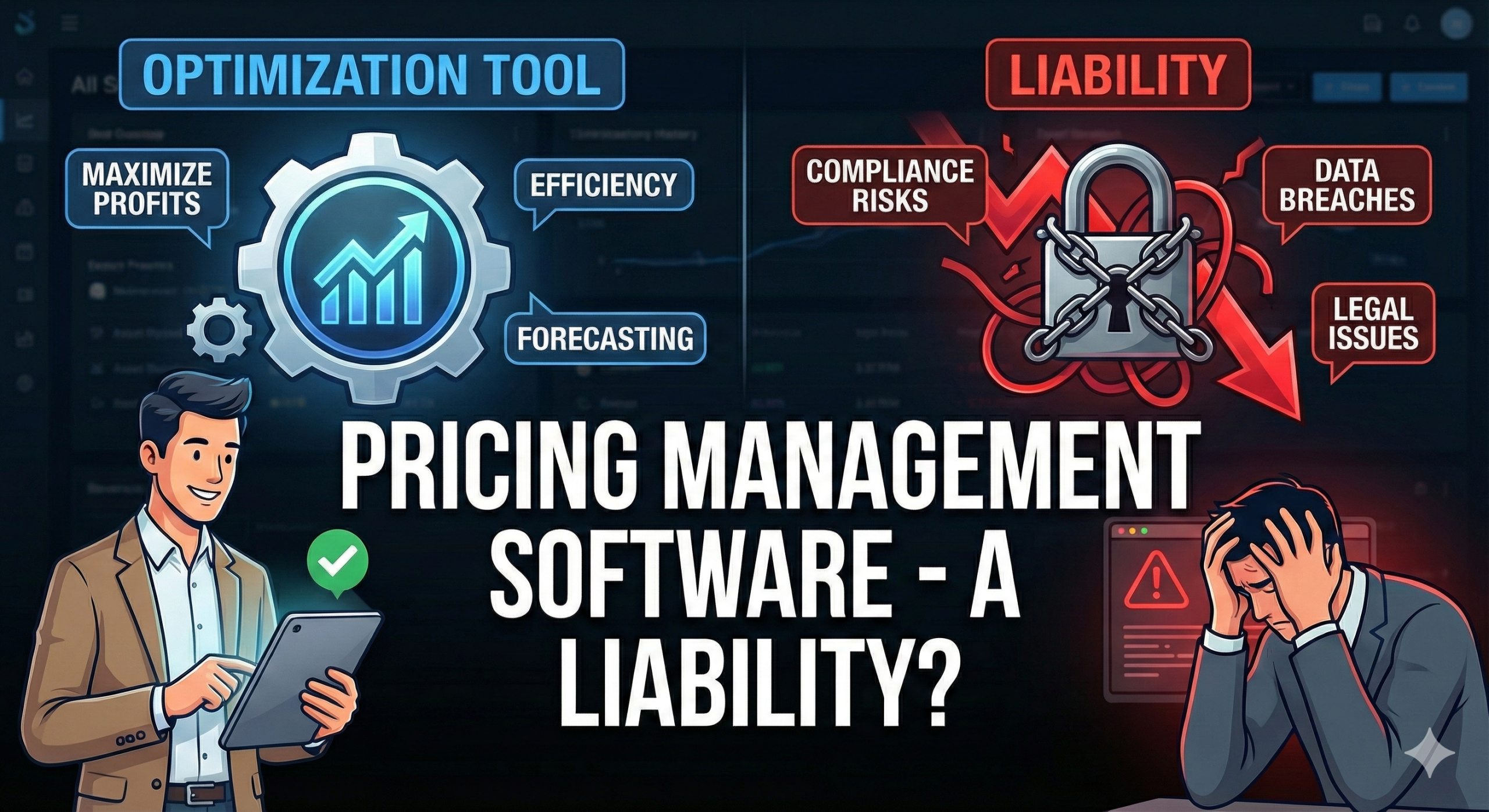
The DOJ’s $141 Million Wake-Up Call to Property Managers: AI Pricing Just Became a Compliance Nightmare
Here’s a question that will keep multifamily operators up at night: When your revenue management software spits out a rent recommendation, who actually made that decision?
Was it you? Your regional manager? The algorithm? Or was it — and this is the part that has the Department of Justice paying very close attention — your competitor down the street?
Because as of late November 2025, the rules of the game have fundamentally changed. And if you’re a property manager still treating revenue management software as just another operational tool, you’re about to learn an expensive lesson.
The Settlement That Changed Everything
On November 24, 2025, the Department of Justice filed a proposed settlement with RealPage Inc. that sent shockwaves through the multifamily industry. The seven-year consent decree doesn’t just slap restrictions on one software company — it fundamentally redefines what “independent pricing decisions” means in an AI-powered world.
The core allegation? That RealPage’s revenue management software collected nonpublic, competitively sensitive data from landlords and used it to generate rental pricing recommendations — essentially enabling competing property owners to coordinate prices without ever speaking to each other. According to the DOJ, this amounted to “replacing competition with coordination.”
Key Facts from the Settlement:
- RealPage can no longer use real-time, nonpublic data to generate pricing recommendations. Any nonpublic data used to train algorithms must be at least 12 months old.
- Geographic modeling is now banned below the state level — no more neighborhood or submarket-specific recommendations based on competitor data.
- RealPage must accept a court-appointed monitor with broad authority to review code, model training documentation, and runtime logic.
- The company must cooperate in the DOJ’s ongoing lawsuit against major property management companies that used its software.
But here’s what should really concern you: This isn’t just about RealPage. It’s about every AI-powered tool that touches pricing decisions in your portfolio.
The Domino Effect: Landlords Are Already Paying
Before the RealPage settlement was even announced, the dominoes had already started falling for property management companies.
Greystar, the nation’s largest landlord managing nearly 950,000 rental units, agreed to pay $50 million in a class action settlement and another $7 million to a coalition of nine state attorneys general. The federal settlement with the DOJ bars Greystar from using any “anti-competitive” algorithm that relies on rivals’ sensitive data. According to California Attorney General Rob Bonta: “Whether it’s through smoke-filled backroom deals or through an algorithm on your computer screen, colluding to drive up prices is illegal.”
In total, more than two dozen property management companies have reached settlements exceeding $141 million. And the litigation is far from over — five major landlords including Camden Property Trust, Cushman & Wakefield’s Pinnacle, and Blackstone’s LivCor still face ongoing claims.
The message from federal and state enforcers is unmistakable: the age of AI doesn’t change the fundamental requirement that competing companies make independent pricing decisions.
Revenue Management Is Now a Compliance Surface
Let’s be blunt about what this means for your operations.
Revenue management software used to be a “set it and optimize” proposition. You plugged in your data, the algorithm did its thing, and you watched occupancy and revenue climb. Simple.
That era is over.
Today, every pricing recommendation your software generates is a potential compliance event. Every piece of data that feeds into that recommendation needs documentation. And every decision to accept, reject, or modify that recommendation needs a clear chain of accountability.
The New Compliance Requirements Under the RealPage Settlement:
- No Nonpublic Competitor Data in Runtime Operations: Revenue management products cannot use any nonpublic, competitively sensitive information — whether current or historical — in the actual generation of pricing recommendations.
- 12-Month Data Lag for Model Training: Any nonpublic data used to train AI models must be backward-looking and at least one year old.
- No Geographic Specificity: Algorithms cannot identify geographic effects narrower than statewide for pricing models based on nonpublic cross-owner data.
- No Price Floor Features: Software cannot incorporate rental price floors or limits on price recommendation decreases. The “Governor” feature that allegedly favored price increases must now be symmetrical.
- No Information Sharing at Vendor Meetings: Property managers are prohibited from attending vendor-hosted meetings where competitively sensitive information might be discussed.
Who Owns the Decision? The Question Nobody’s Answering
Here’s where things get uncomfortable for most property management organizations.
When an AI recommendation comes through your system, who in your organization actually decides whether to implement it? Is it the site manager who clicks “accept”? The regional director who set the parameters? The VP who selected the software? The algorithm itself?
The DOJ settlement makes clear that “humans in the loop” isn’t just a nice-to-have feature — it’s a potential liability shield. But only if that human involvement is genuine, documented, and represents an actual independent decision.
Questions You Should Be Asking Right Now:
- Does your revenue management software allow you to see what data sources feed into pricing recommendations?
- Can your site teams meaningfully evaluate and override algorithmic suggestions, or are they effectively rubber-stamping AI decisions?
- Do you have documentation showing when recommendations were accepted, modified, or rejected — and why?
- If the DOJ subpoenaed your pricing records tomorrow, could you demonstrate independent decision-making?
- Has your software vendor certified compliance with the new requirements — and what does that certification actually cover?
The Renewal Conversation Just Got Harder
Let’s zoom in on one of the most critical moments in property management: lease renewals.
According to the 2025 Zego Resident Experience Management Report, operators targeted a 63% resident retention rate but averaged only 58%. Converting undecided residents — the 23% who haven’t made up their minds about renewing — is where the real NOI opportunity lives.
But here’s the problem: renewal conversations are about to get a lot more complicated.
When a resident asks why their rent is increasing 8% while the building next door is only going up 5%, what do you say? “The algorithm recommended it” isn’t going to cut it anymore — especially if that algorithm was using your competitor’s data to arrive at its recommendation.
Worse, if your renewal offer matches your competitor’s a little too perfectly, you now have a resident who might be wondering — and talking to lawyers who definitely will be — whether something fishy is going on.
Interested in how AI can actually help your renewal conversations while staying compliant? The right AI marketing tools can predict resident intent, personalize outreach timing, and surface at-risk renewals early — all using your own property data. Contact us to learn how to implement AI workflows that drive retention without the compliance risk.
The State-Level Patchwork Is Coming
As if federal scrutiny wasn’t enough, states and cities are piling on.
California banned the use and distribution of AI pricing technology that uses competitor data when Governor Gavin Newsom signed AB 325 on October 6, 2025. The law, effective January 1, 2026, makes it unlawful to use or distribute AI pricing technology as part of an agreement in restraint of trade. It even creates a standalone offense for coercing another firm to adopt AI pricing technology.
New York amended its antitrust statute (the Donnelly Act) to explicitly target algorithms in residential rent-setting, effective December 15, 2025. RealPage has already filed a constitutional challenge.
San Francisco and Philadelphia passed local ordinances banning certain rental revenue management software. Seattle has similar restrictions in place.
Ten state attorneys general joined the federal lawsuit against RealPage: California, Colorado, Connecticut, Illinois, Massachusetts, Minnesota, North Carolina, Oregon, Tennessee, and Washington.
If you operate in multiple states — and most institutional property managers do — you’re now navigating a compliance patchwork that varies by jurisdiction. The California rules are different from New York. Local ordinances add another layer. And federal requirements apply everywhere.
The Contrarian Take: AI Isn’t the Problem — It’s the Implementation
Here’s where I’ll push back on the narrative.
The DOJ settlement doesn’t ban AI-powered revenue management. It doesn’t prohibit algorithmic pricing. RealPage is still in business, and the settlement explicitly allows continued use of their software — just with guardrails.
As Michelle Mantine of Reed Smith noted: “This is a reemphasis, not a rewrite.” The settlement applies longstanding antitrust norms — independent pricing decisions, restrictions on competitor information sharing — to new technology.
The real lesson isn’t that AI is dangerous. It’s that AI implementation requires thoughtfulness.
There’s nothing illegal about using AI to analyze your own property’s historical performance, predict demand patterns, optimize lease terms, or personalize resident communications. In fact, these applications can drive significant value — the right AI tools can complete renewal decisions 30 days faster and improve retention rates by 7%.
The problem arises when AI becomes a vehicle for sharing competitive information that companies couldn’t legally share directly. When your algorithm knows what your competitor is charging in real-time — and uses that information to generate your pricing — you’ve created an antitrust problem that no amount of technological sophistication can solve.
What Smart Property Managers Should Do Now
1. Audit Your Revenue Management Stack
Request documentation from your software vendors about what data sources feed into pricing recommendations. Ask specifically whether any nonpublic competitor data is used — and if so, how old it is and at what geographic granularity.
2. Establish Clear Decision Authority
Document who in your organization has authority to accept, modify, or reject algorithmic pricing recommendations. Create audit trails that demonstrate genuine human oversight.
3. Train Your Teams
Site managers and regional directors need to understand that they’re not just pushing buttons — they’re making independent business decisions that could be scrutinized by regulators. The consent decrees require annual antitrust compliance training.
4. Avoid Information-Sharing Forums
The settlement explicitly prohibits RealPage-hosted meetings where pricing strategies or nonpublic data might be discussed. Apply the same caution to industry events, user groups, and informal conversations with competitors.
5. Consider Your Renewal Messaging
When residents ask about rent increases, be prepared to explain your pricing rationale in terms of your property’s value proposition — not market coordination. Your leasing teams need talking points that don’t create liability.
6. Invest in Compliant AI Tools
The future of property management absolutely includes AI — but it needs to be AI that uses your own data, respects competitive boundaries, and enhances rather than replaces human decision-making.
The Opportunity Hidden in the Compliance Challenge
Here’s the uncomfortable truth that industry advocates don’t want to discuss: if your competitive advantage was dependent on having access to your competitors’ pricing data, you never really had a competitive advantage.
The property managers who will thrive in the post-RealPage settlement world are those who build genuine differentiation — in resident experience, operational efficiency, marketing effectiveness, and service quality.
AI can absolutely help with all of those things. Predictive analytics can identify at-risk residents before they give notice. Personalized communication can improve renewal conversion. Automated workflows can free your teams to focus on high-value resident interactions. Marketing optimization can reduce your cost per lease.
None of that requires your competitors’ data. All of it creates sustainable competitive advantage.
AI Tools Worth Exploring (That Don’t Create Compliance Risk)
If you’re looking to leverage AI in your property management operations while staying on the right side of antitrust law, consider these categories of tools:
- Resident Retention Platforms: Tools like Renew AI that analyze your own resident data to predict renewal intent, personalize outreach timing, and identify at-risk residents early.
- Marketing Automation: AI-powered marketing tools that optimize your advertising spend, improve lead scoring, and personalize prospect communications based on your property’s data.
- Maintenance Prediction: Predictive analytics for capital planning and preventive maintenance that can improve resident satisfaction and reduce operating costs.
- Communication AI: Chatbots and automated response systems that handle routine resident inquiries while escalating complex issues to human staff.
- Operational Analytics: Dashboards and reporting tools that help you understand your own portfolio’s performance without relying on competitor data.
Looking Ahead: How AI Will Reshape Property Management Compliance
The RealPage settlement is just the beginning.
DOJ Assistant Attorney General Gail Slater has made clear that “algorithmic pricing probes will increase as their use grows.” The Antitrust Division has updated its guidance to specifically address AI-related compliance risks. Senator Amy Klobuchar and colleagues have reintroduced the Preventing Algorithmic Collusion Act in 2025.
Expect more settlements, more state legislation, and more scrutiny of any technology that enables information sharing among competitors — regardless of how sophisticated the algorithm or how indirect the sharing mechanism.
The property managers who prepare now will have a significant advantage over those who wait for enforcement action to force change.
Ready to Implement AI the Right Way?
The age of AI in property management isn’t ending — it’s evolving. And the opportunities for operators who get implementation right have never been greater.
The key is understanding which AI applications create value without creating liability. That means using your own data, maintaining genuine human oversight, documenting your decision-making processes, and focusing on resident experience rather than competitor coordination.
We specialize in helping property managers implement AI marketing strategies that drive results — improved retention, better lead conversion, more efficient operations — while staying compliant with the rapidly evolving regulatory landscape.
Whether you’re looking to overhaul your renewal process, optimize your marketing spend, or build a comprehensive AI strategy for your portfolio, we can help you navigate the opportunities and avoid the pitfalls.
Contact us today to schedule a consultation. Let’s talk about how to make AI work for your properties — safely, effectively, and profitably.
Because in the new world of algorithmic compliance, the question isn’t whether to use AI. It’s how to use it without becoming the next headline.
— — —
Sources:
U.S. Department of Justice Press Release: Justice Department Requires RealPage to End the Sharing of Competitively Sensitive Information (November 24, 2025)
Hogan Lovells: Proposed DOJ Settlement Provides Guidance on Use of Competitive Information in Algorithmic Pricing Tools
Wilson Sonsini: DOJ Settles Its Algorithmic Price-Fixing Case Against RealPage
California Attorney General: Attorney General Bonta Announces $7 Million Settlement with Greystar (November 19, 2025)
Reed Smith: Algorithmic Pricing Under Pressure: DOJ’s RealPage Settlement Changes the Rules (December 3, 2025)
ProPublica: DOJ and RealPage Agree to Settle Rental Price-Fixing Case (November 26, 2025)
NPR: New Limits for Rent Algorithm That Prosecutors Say Let Landlords Drive Up Prices (November 25, 2025)
Mintz: Last Year’s Rent: RealPage Reaches Settlement Agreement with DOJ (December 1, 2025)
— — —AI Disclosure: This article was generated with AI assistance and may contain inaccuracies. While we strive for accuracy, readers should verify critical information independently. The content is provided for informational purposes only and does not constitute legal advice. Please consult with qualified legal counsel regarding compliance matters specific to your operations.